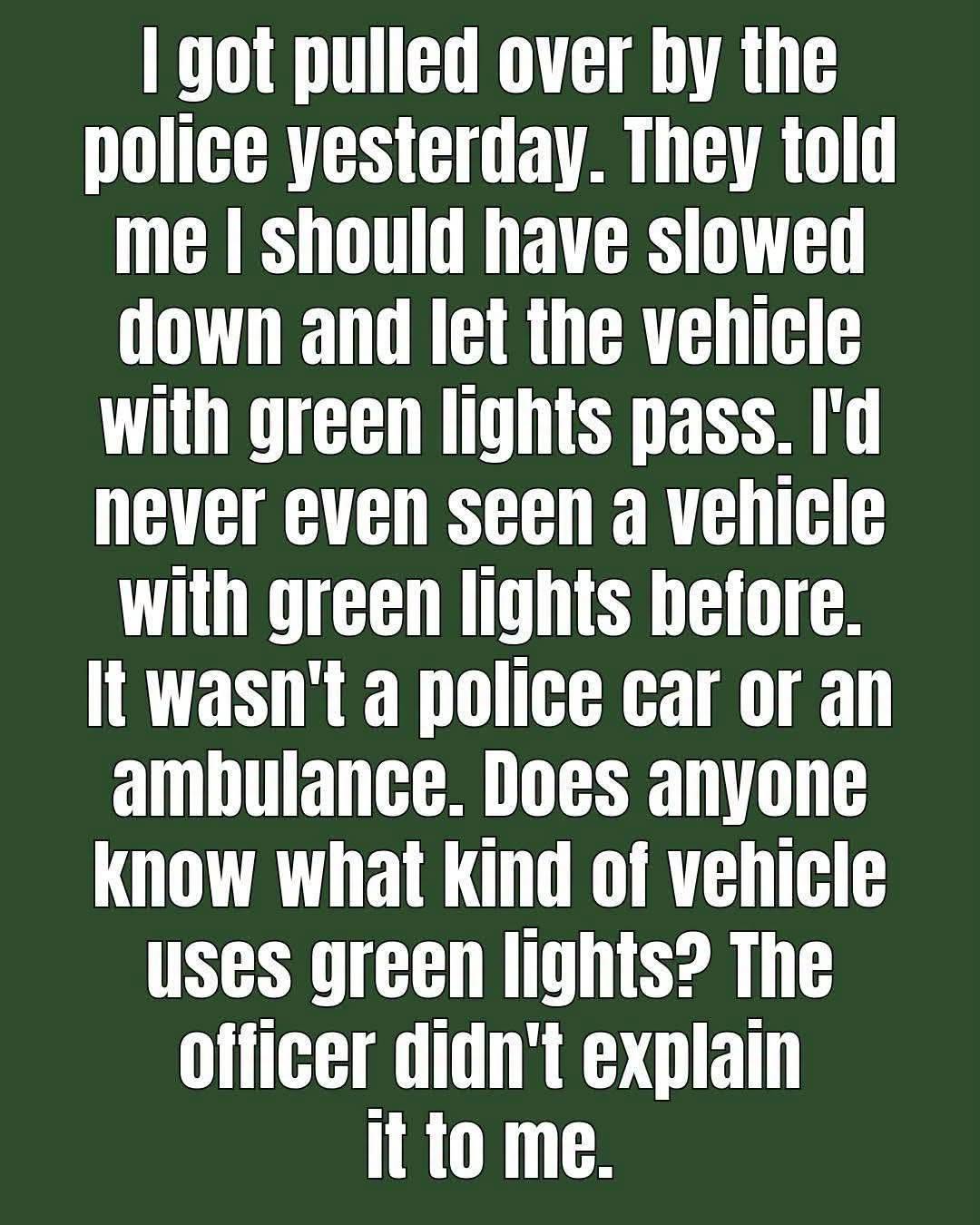
Have you ever been driving along a familiar road and suddenly noticed a vehicle displaying flashing green lights? If so, you may have wondered what those lights mean and why that particular vehicle is using them.
Unlike the red and blue lights commonly associated with emergency services, green warning lights are less familiar to many drivers. Their meaning can also vary depending on the country, state, and local traffic regulations.
In some places, green flashing lights are associated with volunteer emergency responders, including certain ambulance or rescue personnel. In other locations, they may identify a different type of authorized service vehicle.
Understanding these signals can help drivers become more aware of their surroundings and make safer decisions on the road.
What Does a Green Light on a Vehicle Usually Mean?
There is no single worldwide rule that gives green vehicle lights the same meaning everywhere.
In certain parts of the United States, flashing green lights may be used by authorized volunteer ambulance or rescue squad members responding to an emergency. The purpose is to help other motorists recognize that someone involved in emergency response is traveling to assist others.
For example, New York allows certain vehicles operated by volunteer ambulance and rescue squad members to display green warning lights under applicable rules.
However, these vehicles are not automatically considered authorized emergency vehicles with the same privileges as police cars, fire engines, or ambulances.
This distinction is important because drivers should never assume that every vehicle displaying green lights has the legal right to pass through traffic or disregard ordinary road rules.
Why Do Some Emergency Responders Use Green Lights?
Emergency response services depend on communication, coordination, and visibility.
When a volunteer responder receives a call, they may need to travel from their home or workplace to a designated location before joining the response team.
In some jurisdictions, an authorized green warning light helps identify these individuals to other road users.
The light serves as a visual signal that the driver may be responding to an important situation.
It can also encourage other motorists to pay attention and provide reasonable assistance when appropriate.
Green lights are particularly interesting because their use is not universal. The regulations governing them are established by individual jurisdictions, which means the same signal can have different meanings in different places.
Who May Use Green Flashing Lights?
Depending on local regulations, certain categories of personnel may be authorized to use green warning lights.
These can include:
1. Volunteer Ambulance Personnel
In some jurisdictions, members of volunteer ambulance organizations may use authorized green lights while responding to emergency calls.
2. Volunteer Rescue Responders
Certain volunteer rescue organizations may also have specific lighting permissions, depending on local legislation.
3. Firefighters in Certain Regions
In some locations, green flashing lights are associated with volunteer firefighters rather than medical responders.
For example, Quebec permits authorized firefighters to use flashing green lights when traveling to a fire station or the scene of an emergency.
4. Emergency Command Vehicles
In some emergency management systems, green lights may be used to identify an incident command vehicle or a designated coordination position.
These examples demonstrate why it is important to understand local regulations rather than relying on one universal explanation.
What Is the Difference Between Green, Red, Blue, and Amber Lights?
For Complete Cooking STEPS Please Head On Over To Next Page Or Open button (>)