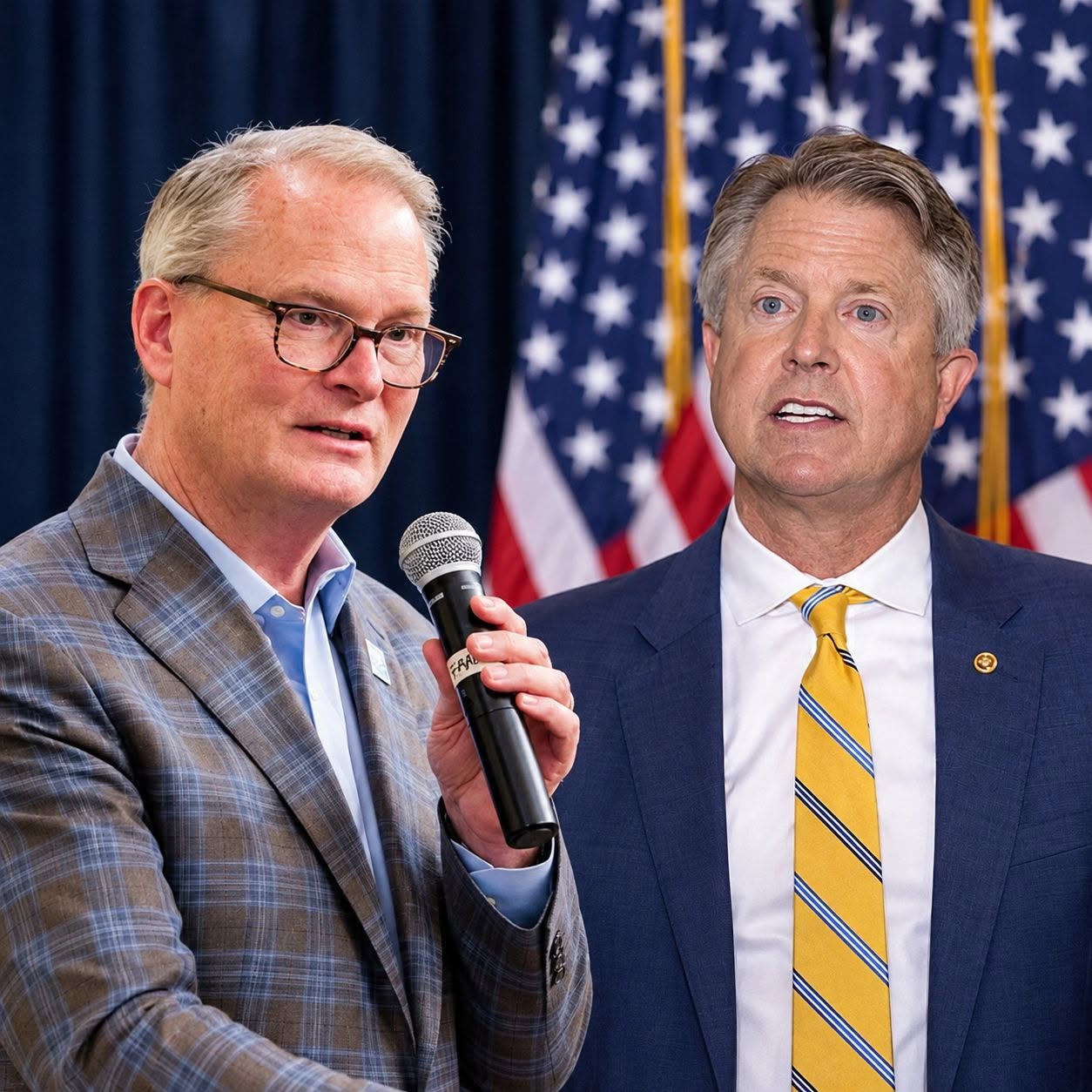
There was no single reason behind Hamilton’s victory. Several political and economic factors contributed to the result.
One of the most important issues was the cost of living.
Many Americans have expressed concern about the prices of groceries, housing, transportation, healthcare, and other everyday necessities. These financial pressures became central subjects during the 2026 campaign.
Hamilton focused heavily on affordability and argued that elected officials needed to pay closer attention to the economic challenges facing ordinary households.
Healthcare was another important issue. As a pastor and community leader, Hamilton frequently connected his campaign message to the practical needs of families and people who rely on accessible medical services.
The election also took place during a period of considerable debate about American foreign policy, particularly the conflict involving Iran.
According to post-election reporting, dissatisfaction with the war and its economic consequences contributed to Republican losses in several parts of the country.
These issues created an environment in which some voters who had previously supported Republicans were willing to consider Democratic candidates.
A Campaign That Reached Beyond Traditional Party Lines
One of the most interesting aspects of Hamilton’s campaign was his effort to attract voters outside the traditional Democratic base.
Kansas has a strong Republican identity, particularly in rural communities. Winning a statewide election there requires a candidate to connect with voters who may have different political priorities.
Hamilton attempted to present himself as an independent-minded Democrat who could work with people across party lines.
He also made a point of distancing himself from certain national Democratic leaders. During the campaign, he said he would not support Chuck Schumer continuing as Senate majority leader if Democrats won control of the chamber.
That message was intended to reassure voters who might have been uncomfortable with the direction of the national Democratic Party.
His strategy demonstrated that candidates in traditionally Republican states may need to develop a political identity that reflects local concerns rather than relying entirely on national party messaging.
The Financial Battle Behind the Election
The Kansas Senate race attracted considerable financial and political attention.
Millions of dollars were spent by campaigns and outside groups trying to influence voters. National organizations recognized that the outcome could affect control of the Senate, making the contest far more important than an ordinary statewide election.
Republicans invested significant resources in defending Marshall’s seat, while Democrats saw an opportunity to make history.
The campaign also featured competing advertisements and public criticism from both sides.
Republicans raised questions about Hamilton’s record as a church leader, including how his congregation handled a historical abuse allegation. Hamilton acknowledged that the church should have reported the allegation to authorities.
Democrats, meanwhile, focused on questions surrounding Marshall’s former medical practice and his political record.
These disputes became part of a highly competitive campaign in which voters were asked to evaluate both candidates’ backgrounds and positions.
Ultimately, Hamilton’s message and the broader political environment proved more successful.
What Does This Victory Mean for the Republican Party?
The result represents a major setback for Republicans.
Kansas has traditionally been considered a safe state for Republican Senate candidates. Losing a seat there is therefore particularly significant, especially during an election in which the party also experienced setbacks elsewhere.
The outcome raises questions about the Republican Party’s ability to maintain support among independent voters and moderate conservatives.
It also creates new challenges for Republican leaders as they prepare to serve in the minority when the next Congress begins in January 2027.
However, one election does not automatically mean that Kansas has permanently changed its political identity.
Voters make decisions based on individual candidates, economic conditions, national events, and local concerns. Future elections could produce different results.
Nevertheless, Hamilton’s victory will likely remain one of the most memorable Senate outcomes of the 2026 election cycle.
Democrats Gain Momentum Across the Country
The Kansas result was part of a much broader Democratic victory.
Democrats made significant gains in several states, including traditionally competitive and Republican-leaning areas.
The party also secured control of both the House of Representatives and the Senate, creating a major shift in Washington’s political balance.
Other important results included Democratic victories in Texas and Michigan, along with changes in several gubernatorial and congressional races.
The scale of the shift suggests that dissatisfaction with national policies played an important role in the election.
Reuters reported that Republican support declined across the vast majority of counties where results had been counted, highlighting the broad geographic reach of the Democratic gains.
For Democrats, the results represent an opportunity to influence the legislative agenda and increase oversight of the federal government.
For Republicans, they create a need to reconsider campaign strategies and identify the concerns that contributed to the losses.
What Happens Next in the United States Senate?
Although the election results have created a new political balance, the transition of power will take place when the next Congress begins in January 2027.
The Senate plays a major role in approving presidential appointments, considering legislation, reviewing international agreements, and conducting oversight of the federal government.
With Democrats preparing to take control, negotiations between the two parties could become more complicated.
President Donald Trump will continue serving in the White House, but he will face a Congress controlled by the opposing party in both chambers.
This situation could lead to political disagreements over government spending, healthcare, foreign policy, judicial appointments, and other major issues.
At the same time, both parties will have reasons to negotiate on legislation that requires congressional approval.
The outcome of the Kansas race therefore carries consequences beyond the state itself.
A Political Moment That Will Be Remembered
Adam Hamilton’s victory is historic for Kansas because it ends a 94-year period without a Democratic senator from the state.
It also demonstrates that political assumptions can change when voters face new economic challenges, evaluate candidates differently, or become dissatisfied with the direction of national leadership.
For Hamilton, the victory represents the beginning of a new chapter in public service. He will enter the Senate with significant expectations from supporters who believe his background and campaign message can bring a different perspective to Washington.
For Roger Marshall and the Republican Party, the defeat represents a difficult moment that will require reflection and political reassessment.
The broader lesson from the 2026 election is that no political advantage should be considered permanent. Even states with long-standing voting traditions can produce unexpected outcomes when the political environment changes.
As the new Congress prepares to take office, Americans will be watching closely to see how both parties respond to the results and what the historic Kansas victory means for the country’s political future.
For Complete Cooking STEPS Please Head On Over To Next Page Or Open button (>)