Parents sometimes associate bullying only with physical confrontations. However, harmful behavior can take many different forms.
Physical bullying: This may include hitting, pushing, kicking, damaging belongings, or using physical intimidation.
Verbal bullying: Repeated insults, name-calling, threatening comments, and humiliating remarks can make children feel uncomfortable and isolated.
Social bullying: Deliberately excluding a child, spreading rumors, encouraging others to avoid someone, or publicly embarrassing a classmate can also cause significant distress.
Cyberbullying: Digital communication can create additional challenges. Hurtful messages, threatening comments, embarrassing images, and repeated online harassment may follow children beyond the school environment.
Recognizing these different behaviors helps parents understand that bullying is not always easy to identify. Sometimes a child may be experiencing difficulties without knowing how to describe them.
How Parents Can Help Children Respond to Bullying
There is no single response that works in every situation. However, parents can take practical steps to help children feel supported and better prepared.
1. Listen Carefully and Take Their Feelings Seriously
When a child talks about being bullied, listening should come first.
Parents should give children enough time to explain what happened without interrupting or immediately questioning their reactions. Calm and supportive conversations can help children feel safe enough to share important details.
Questions such as “Can you tell me what happened?” or “How did that make you feel?” may help parents understand the situation.
Avoid dismissing the experience with statements such as “Just ignore it” or “It is probably nothing.” Even if an incident seems small to an adult, it may feel very significant to a child.
2. Teach Children to Communicate Clear Boundaries
Children can benefit from learning simple, confident ways to express discomfort.
For example, they can practice saying:
- “Please stop. I do not like that.”
- “That behavior is not acceptable.”
- “I want you to leave me alone.”
- “I am going to speak to a teacher.”
These expressions can help children communicate their boundaries without insulting or threatening another person.
Parents can practice these situations through everyday conversations or simple role-playing exercises.
3. Make Asking for Help a Normal Choice
Some children hesitate to report bullying because they fear being embarrassed, misunderstood, or targeted again.
Parents should explain that asking for help is not a weakness. It is a responsible way to deal with a difficult situation.
Children should know which adults they can approach, including teachers, school counselors, administrators, family members, or other trusted people.
It is also helpful to identify a safe place at school where the child can go if they feel uncomfortable or threatened.
4. Build Confidence Through Positive Experiences
Confidence develops through encouragement, practice, and supportive relationships.
Sports, music, art, group activities, and other hobbies can give children opportunities to discover their abilities and develop friendships.
These activities do not automatically prevent bullying, but they can help children build communication skills and a stronger sense of self-worth.
Parents should also recognize their children’s achievements, listen to their opinions, and encourage them to express themselves respectfully.
5. Document Repeated Incidents
When bullying continues, keeping a clear record can be useful.
Parents may write down the dates, locations, descriptions of incidents, and names of people who witnessed what happened.
For online bullying, screenshots and copies of relevant messages may help establish what occurred. Parents should preserve this information safely and avoid sharing it publicly.
A documented record can make conversations with school staff more productive and help them understand whether there is a repeated pattern of behavior.
6. Work With the School
Schools have an important role in creating safe learning environments.
If a child reports repeated bullying, parents should contact the appropriate school representative and explain their concerns clearly.
They can ask what steps will be taken to investigate the situation, support the affected child, and prevent further incidents.
If the initial response does not resolve the problem, parents may need to follow the school’s formal reporting process or contact the relevant education authority.
The focus should remain on the child’s safety, emotional well-being, and access to education.
What Should Parents Do When a Child Is Being Physically Threatened?
Physical threats require particular attention.
Parents should teach children that their first priority is to move away from danger whenever possible and find a responsible adult.
Children should not be encouraged to arrange confrontations, seek revenge, or use violence to settle disagreements.
If a child faces an immediate physical threat, they should focus on protecting themselves and getting help as quickly as possible.
Parents should also communicate with school staff to make sure appropriate safety measures are considered.
When an incident involves injury or a serious threat, seeking appropriate professional or emergency assistance may be necessary.
Supporting Children Who May Be Bullying Others
Preventing bullying also means paying attention to the behavior of children who may be causing harm.
A child who repeatedly intimidates or mistreats classmates needs guidance and clear boundaries. Simply labeling the child as bad does not address the behavior or help prevent it from happening again.
Parents should try to understand what is happening, explain why the behavior is unacceptable, and establish appropriate consequences.
They can also encourage empathy by helping children recognize how their actions affect others.
Working with teachers or school counselors may help identify useful ways to improve behavior, communication, and conflict-resolution skills.
Every child should be held responsible for their actions while still having the opportunity to learn and make better choices.
The Importance of Emotional Support
The effects of bullying are not always immediately visible.
Some children may become quieter, lose interest in activities, experience changes in their friendships, or seem unusually worried about going to school.
Parents should pay attention to noticeable changes in behavior and create opportunities for regular conversations.
If a child appears persistently distressed, anxious, or withdrawn, consulting a qualified mental health professional may provide additional support.
The goal is not simply to stop individual incidents but also to help children regain confidence and feel secure in their everyday lives.
Teaching Respect Begins at Home
The conversation about bullying should not focus only on how children defend themselves. It should also address how they treat other people.
Children learn important social behaviors by observing adults. The way parents communicate, resolve disagreements, and respond to frustration can influence how children approach their own relationships.
Teaching kindness, empathy, patience, and responsibility from an early age can help children understand the importance of treating others with respect.
At the same time, parents should explain that kindness does not mean accepting repeated mistreatment.
A child can be respectful while maintaining firm boundaries. They can be confident without being aggressive and ask for help without feeling ashamed.
These are valuable lessons that extend far beyond the school years.
A Viral Message That Raises an Important Parenting Question
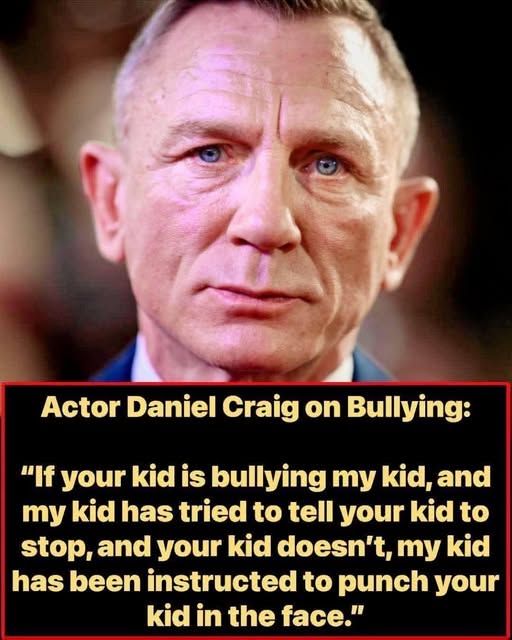
The image attributed to Daniel Craig has attracted attention because it touches on a subject that many families understand personally. Although the quotation’s authenticity remains unconfirmed, the discussion surrounding it highlights an important challenge for parents.
Children need to know that they deserve respect, that harmful behavior should not be ignored, and that they have adults who will listen and support them.
However, encouraging children to respond to every conflict with physical force is not a responsible approach. They need practical tools that help them recognize unsafe situations, communicate boundaries, seek assistance, and protect themselves appropriately.
Ultimately, the goal of parenting should not be to prepare children to win fights. It should be to help them become confident, compassionate, and capable of handling difficult situations safely.
Every child deserves to feel protected, respected, and heard. And no child should ever have to deal with bullying alone.
For Complete Cooking STEPS Please Head On Over To Next Page Or Open button (>)